Alpha Club
Aimed at Web3 users, this SocialFi product encourages publishing podcasts and voice messages. Users can create their own clubs (podcast homepages), and if others find a creator's content valuable, they can purchase access to their room. As a creator's popularity increases, so does the room's value, benefiting both buyers and creators. The design direction focuses on retro-future and Y2K styles. Retro-future resonates with early internet users nostalgic for the BBS era, while Y2K appeals to younger generations born after 2000 who are the main force in Web3, despite not experiencing the millennium shift. These visual styles foster emotional connections among users. In an era leaning towards modern, minimalist design, the unique retro-future and Y2K styles stand out in the market. Note: Project not yet launched. Contact me for access to the full design in Figma files.
My Role
Product Designer
System Builder
Motion Maker
Tools
Figma
After Effects
Timeline
2023 - 2024
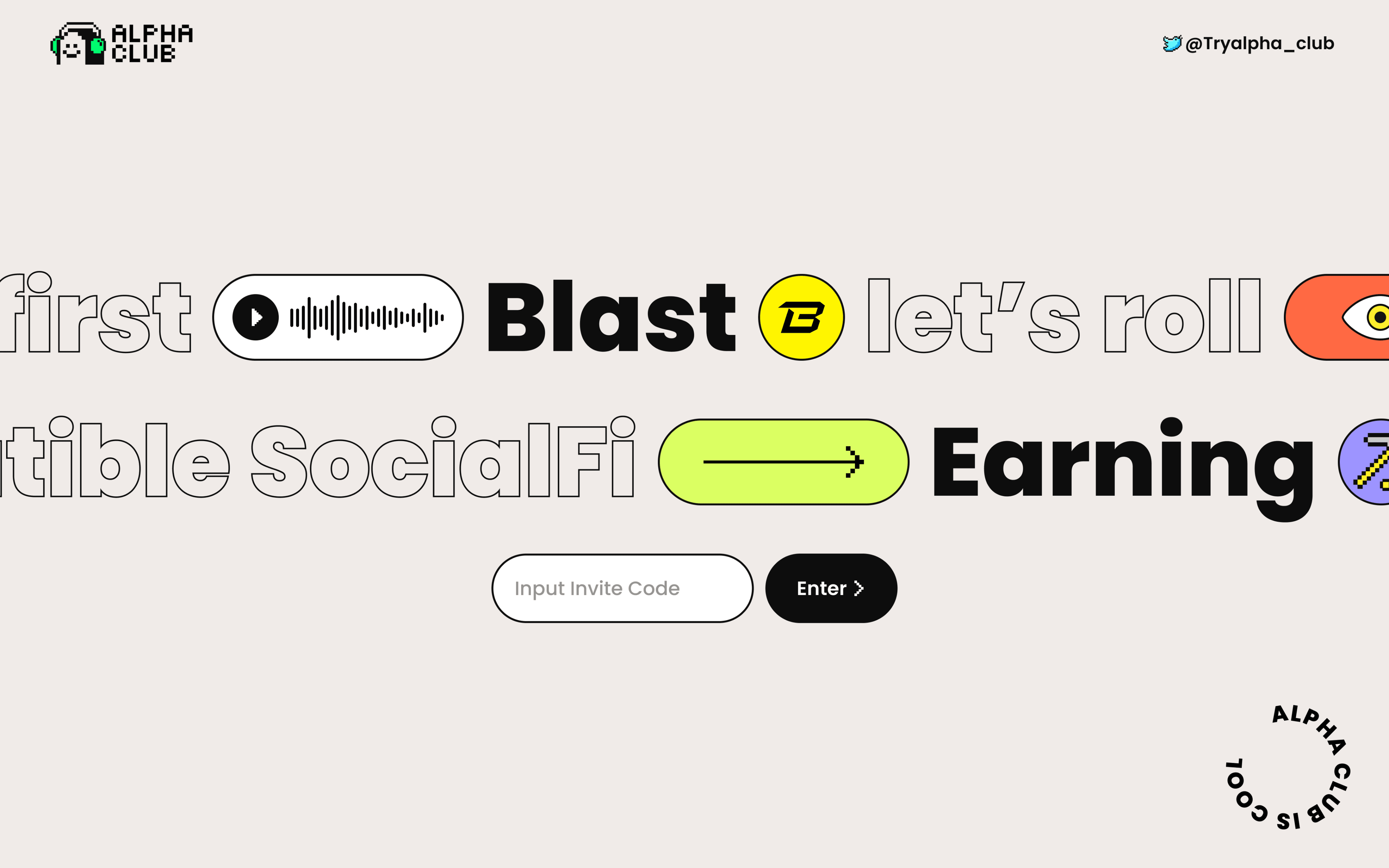
Landing Page Concept
Concept 01 — Soft Retro-Future (Selected Direction)
The first concept embraces a softer interpretation of retro-futurism, combining rounded interfaces, subtle gradients, and low-saturation color palettes with playful Y2K-inspired details. The visual language balances nostalgia with modern usability, creating a welcoming social atmosphere while preserving a distinctive identity that stands apart from conventional Web3 products.
Concept 02 — Pixel Retro Console
The second concept takes a stronger nostalgic approach by incorporating pixel-inspired typography, high-contrast monochrome elements, and interfaces reminiscent of early operating systems and handheld gaming devices. While the style delivers a bold retro personality, its heavier visual treatment places greater emphasis on aesthetics than readability and long-term usability.
Key Pages
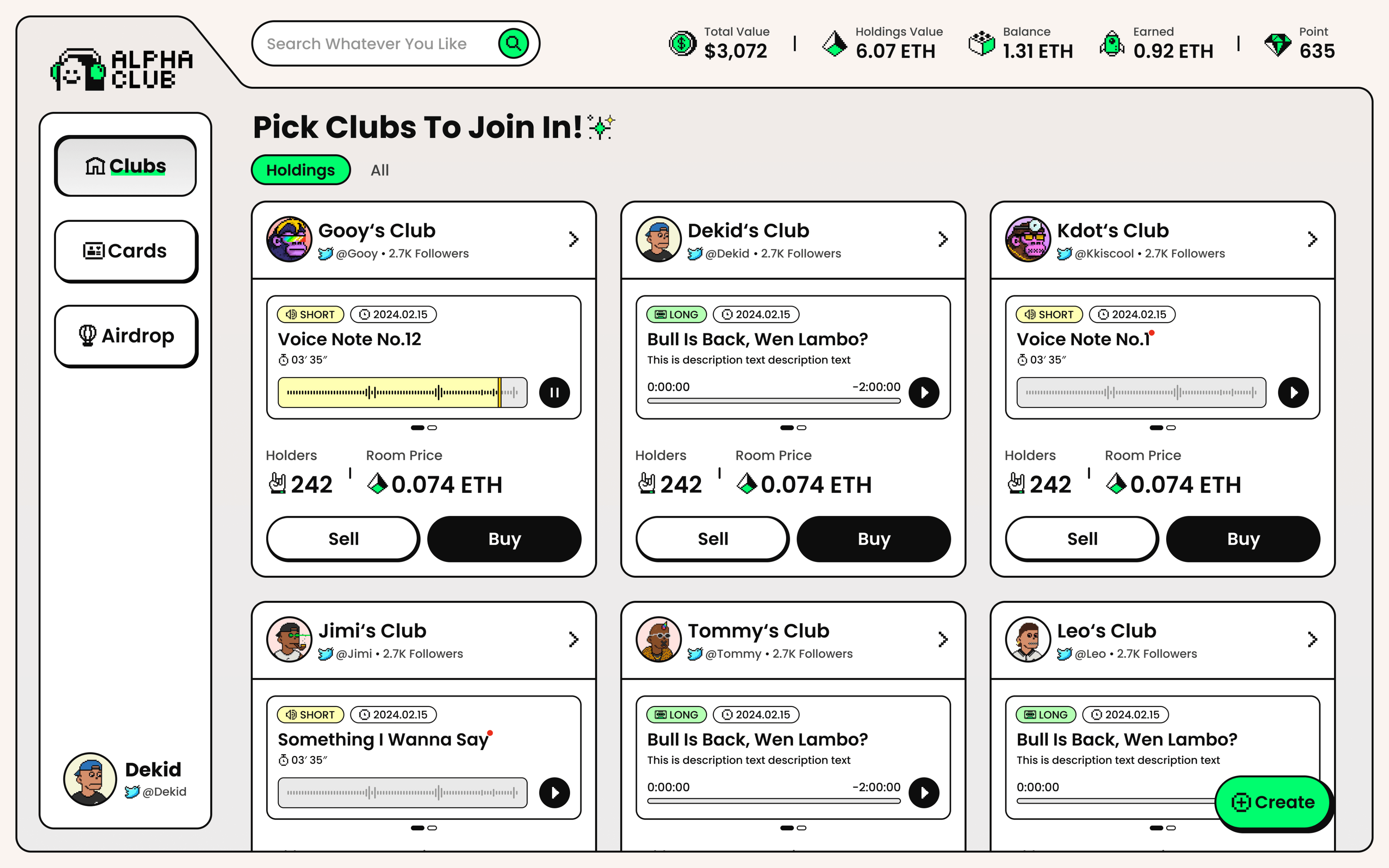
Club Discovery
The homepage serves as a discovery hub where users can explore creator-led clubs ranked by popularity and market value. Members can seamlessly buy or sell club tokens, while a floating voice recorder encourages creators to publish podcasts and voice messages with minimal friction.
Token Trading
The trading experience enables users to purchase and manage club tokens using ETH. The interface simplifies Web3 transactions through a clear, accessible flow while reinforcing the ownership model behind creator communities.
Club Profile
Each club features a dedicated profile that visualizes key community metrics, including holders, room price, transaction history, and published content. The page provides both creators and members with a transparent overview of community growth and activity.
Leaderboards
The leaderboard highlights the platform's most active communities through rankings of club access cards and airdrop rewards. By surfacing achievements and community performance, the feature encourages participation and healthy competition across the ecosystem.
Empty States
Custom empty states were designed using Alpha Club's signature house logo as a playful mascot. These illustrations add personality to otherwise inactive screens, creating a more approachable experience while reinforcing the platform's visual identity.